
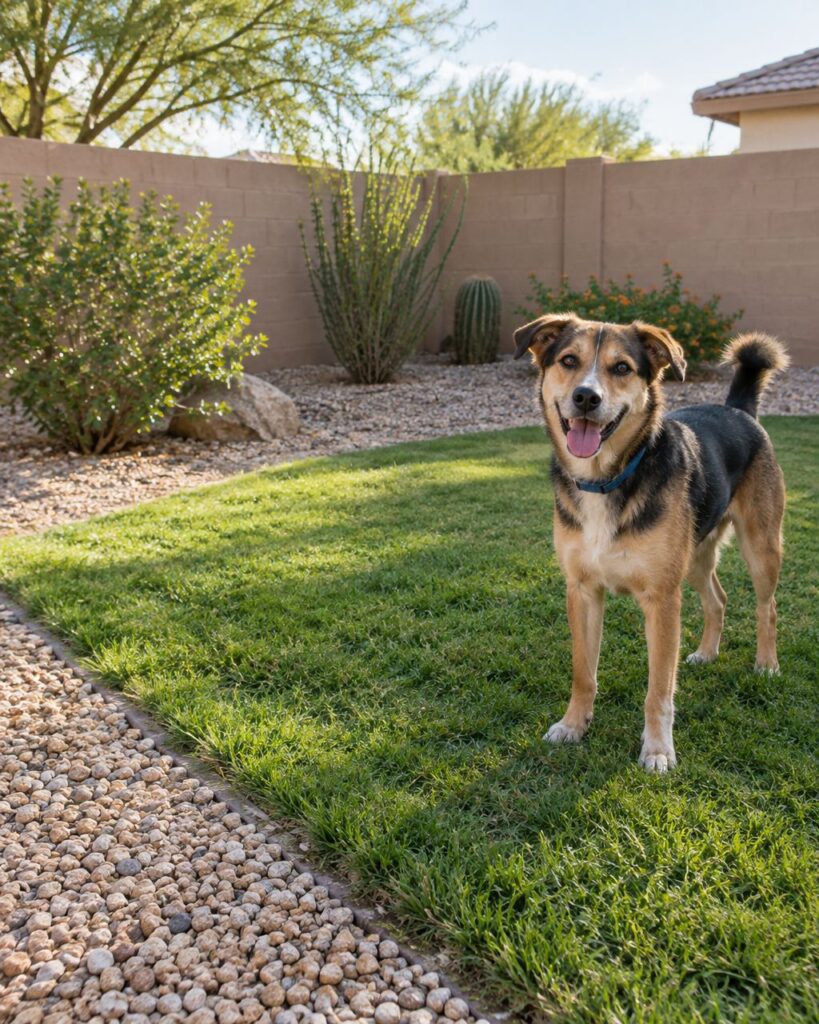
Weekly dog poop removal is a practical starting point for a Phoenix yard that needs regular professional attention. Choose more frequent visits when waste builds up before the next cleanup, and consider bi-weekly service only when lighter yard use and your own pickup between visits make the longer gap manageable.
- Weekly dog poop removal in Phoenix is a useful starting point, not a substitute for pickup between visits.
- Twice-weekly cleanup shortens the gap for multi-dog homes and heavily used yards.
- Bi-weekly service means every other week; check whether that interval suits your actual yard.
- K9 Poop Busters includes free yard deodorizer with recurring cleanup service.
How often should you book dog poop removal in Phoenix?
Choose a service interval based on what happens between cleanups, not just how tidy the yard looks immediately afterward. A yard that looks good on service day but becomes difficult to use before the next visit needs a different routine. The right answer combines professional visits with whatever pickup you are willing and able to handle yourself.
The dog waste removal service options include weekly, bi-weekly, more frequent and one-time cleanup. Here is how those options differ when you are choosing a routine in 2026.
| Cleanup option | Best for | Main benefit | Limitation to consider |
|---|---|---|---|
| Weekly: 1 visit every 7 days | Households wanting a regular starting routine | Keeps professional cleanup on a predictable cycle | Waste still collects between visits |
| Twice weekly: 2 visits per week | Multi-dog homes or yards used frequently | Shortens the time between professional cleanups | Requires access for more visits |
| Bi-weekly: 1 visit every 14 days | Lighter-use yards with pickup between visits | Adds scheduled help to an existing routine | Leaves a longer stretch for new waste to collect |
| One-time cleanup | Existing buildup or a specific occasion | Helps reset the yard | Does not deal with waste deposited afterward |
This is a decision guide, not a promise that one frequency fits every household. A smaller yard with several dogs can need more attention than a larger yard with one dog. Your preferred level of day-to-day cleanup matters just as much as the service label.
Why the gap between visits matters
Booking a service takes a chore off your list. It does not put your dogs on pause. They keep using the yard after the technician leaves, so think about how much cleanup you expect to do between professional visits.
For a busy household, the goal might be less time scooping after work. For a senior who wants help with yard care, the goal might be removing a repetitive task without depending on relatives to do it. A multi-dog household might simply want more of the backyard usable throughout the week.
Your 2026 cleanup plan should fit that goal. If a service schedule still leaves you doing almost all the work you meant to hand over, it is not solving the right problem.
Weekly cleanup: 1 visit every 7 days
Weekly service gives you a regular cleanup day and a clear point for checking whether the schedule works. It is a sensible place to start when you want recurring help but do not yet know how much professional attention your yard needs.
The useful test comes before the next visit. Can you use the yard comfortably? Are you still spending more time scooping than you intended? Does waste repeatedly collect in the areas you use most?
Weekly service is best for a household that wants consistent help and can handle any pickup needed between visits. Its limitation is simple: a weekly appointment cannot remove waste that appears after that appointment.
Before you choose weekly cleanup, consider:
- How many dogs regularly use the yard.
- Whether they use the whole space or one small section.
- How much pickup you want to keep doing yourself.
- Whether children, visitors or other household members use the same area.
- Whether the yard is already overdue for an initial cleanup.
You do not have to choose perfectly on the first try. Describe what you are seeing and ask which frequency fits the yard you actually have.
Twice-weekly cleanup: 2 visits per week
Twice-weekly service shortens the gap between professional visits. It is worth considering when weekly cleanup leaves too much waste in the yard before the next appointment, particularly when several dogs share a smaller outdoor space.
This option is best for households that want more of the recurring work handled for them. The tradeoff is arranging safe yard access more often. Confirm how the visits fit your gate arrangements and household routine before choosing it.
More frequent pickup is not the same as a guarantee that the yard will stay spotless. New waste can appear after any visit, and the designated service area still needs to be accessible.
For your 2026 schedule, choose more frequent service because it solves a visible gap between visits—not because a larger plan sounds better. If weekly cleanup is already meeting your needs, there is no reason to add visits just for the label.
Bi-weekly cleanup: 1 visit every 14 days
Bi-weekly means every other week in this guide, not twice a week. That distinction matters when comparing service descriptions. Ask for the actual visit frequency so you know what you are choosing.
A longer interval can work as support for a lighter-use yard when someone is handling pickup in between. It is less suited to a household expecting professional service to replace nearly all of its own scooping.
Bi-weekly service is best for supplemental help. Its limitation is the 14-day gap, during which your dogs continue to use the space.
Do not choose the longer interval solely because the yard looks large enough to hide the mess. A large yard can spread waste out without reducing the amount you eventually need to remove. Check the areas your dogs use most, including fence lines and the route between the door and their usual spot.
One-time cleanup: a reset before your routine begins
A one-time visit addresses the yard as it is now. It can be useful when cleanup has fallen behind, when you are preparing to use the backyard for an occasion, or before recurring visits begin.
The key distinction is between an initial reset and ongoing maintenance. A yard with existing buildup needs that buildup considered separately; choosing a weekly plan does not make the starting condition irrelevant.
Tell the provider when the yard was last cleaned, how many dogs use it and which areas need attention. If you are unsure, say so rather than estimating a neat answer. Clear information helps avoid different expectations about the first visit.
One-time cleanup is best for a particular need. If your underlying problem is that scooping keeps slipping down the to-do list, recurring visits address the routine rather than just the latest pileup. Your dog is not likely to volunteer for the chore next week.
Why cleanup frequency varies from yard to yard
The calendar is only part of the decision. These details help explain why two Phoenix or West Valley households can need different schedules:
- Number of dogs: More dogs sharing the space generally means more waste to keep up with.
- Concentrated yard use: A small side yard used repeatedly can become inconvenient sooner than a widely used open area.
- Your own pickup routine: Professional visits supplement what happens between them; decide what work you want to retain.
- Existing buildup: A yard starting behind needs a reset considered separately from routine visits.
- Outdoor plans: Frequent use for play, relaxing or visitors changes how much mess you are willing to leave between cleanups.
- Yard access: Locked gates and protective dogs affect whether a scheduled visit can go ahead.
Grass, turf and gravel also deserve a clear description when you request service. Do not assume waste is gone simply because it is harder to spot among rocks or near landscaping.
Does Phoenix heat change the service schedule?
Do not use hot weather as a reason to leave waste in place. For choosing professional visits, focus on whether the yard stays comfortable to use and whether you are keeping up between appointments.
If odors are your main concern, separate solid-waste pickup from other yard-care needs. A more frequent scooping schedule addresses new piles; it does not automatically answer every question about lingering odor, turf care or urine.
The same practical approach works across Phoenix and the West Valley. In 2026, a ZIP code alone should not decide your cleanup frequency. Start with the dogs, the space and the work you want taken off your hands.
How does deodorizer fit into a recurring plan?
K9 Poop Busters includes free yard deodorizer with recurring service. Treat that as an addition to waste removal, not a replacement for picking up visible dog waste or choosing an appropriate schedule.
When discussing your yard, describe where odor is noticeable and whether the surface is grass, gravel or artificial turf. Ask what the treatment covers and what care is still needed between visits. Avoid assuming that deodorizing means the yard has been disinfected or that every source of odor will disappear.
K9 Poop Busters dog waste removal is a practical option for Phoenix and West Valley households wanting recurring cleanup and included yard deodorizer. The important limitation remains the gap between visits: choose that interval around how your household uses the yard.
How do you tell whether the schedule is working?
Check the yard before a scheduled visit as well as afterward. That gives you a better picture than judging only the freshly cleaned result.
Look at the same practical signs each time:
- Whether the areas you use are comfortable to walk through.
- Whether waste is collecting faster than you can manage.
- Whether you are still doing more pickup than you wanted.
- Whether all agreed areas are accessible for cleanup.
- Whether the household's dog count or yard use has changed.
If the routine is not working, describe the specific problem. “The side yard needs attention again before the next visit” is more useful than “the plan is wrong.” It helps you discuss whether to change frequency, improve access or clarify the service area.
How do you start without overcomplicating it?
Use your current yard as the starting point. You do not need to design a perfect maintenance plan before asking for help.
- Note the number of dogs and the surfaces they use.
- Explain any buildup and when the yard was last cleaned.
- Decide how much pickup you want to do between visits.
- Describe gate access and any dogs that need securing.
- Choose a frequency, then judge it by the yard between appointments.
K9 Poop Busters lets you enter your ZIP code on the website to get a quote and sign up for service. Confirm the options for your address rather than assuming that every nearby neighborhood has the same scheduling choices.
FAQ
Is weekly dog poop removal enough for my Phoenix yard?
Weekly service is a practical starting point when you want regular professional help. If waste collects too quickly before the next visit, consider more frequent service or additional pickup between appointments.
Does bi-weekly cleanup mean twice a week?
Bi-weekly means every 14 days in this guide. Twice-weekly service means 2 visits per week, so confirm the actual interval before choosing a plan.
Should I choose more frequent service if I have several dogs?
Consider more frequent service when several dogs leave more waste than you want to manage between visits. The amount of usable yard and your own pickup routine matter alongside the number of dogs.
Do I still need to pick up waste between professional visits?
New waste can appear after any professional visit. Pick it up as needed rather than assuming the yard will stay clear until the next appointment.
Can I start recurring service if my yard has buildup?
Yes, but describe the buildup before the first visit. An initial cleanup may be needed before the regular maintenance schedule begins.
Does recurring K9 Poop Busters service include deodorizer?
K9 Poop Busters includes free yard deodorizer with recurring service. It supplements waste removal and does not replace pickup between visits.
Do I need to be home during cleanup?
You usually do not need to be home when the technician has safe yard access. Make sure the gate is accessible and protective dogs are secured.
One last thing
Before choosing a schedule in 2026, answer one question: how much scooping do you want left on your own list? A plan that looks convenient on paper is only useful if the yard stays easier to enjoy between visits.
Start with a realistic routine, not a promise of a permanently spotless backyard. Then let the actual yard tell you whether the interval needs adjusting.
