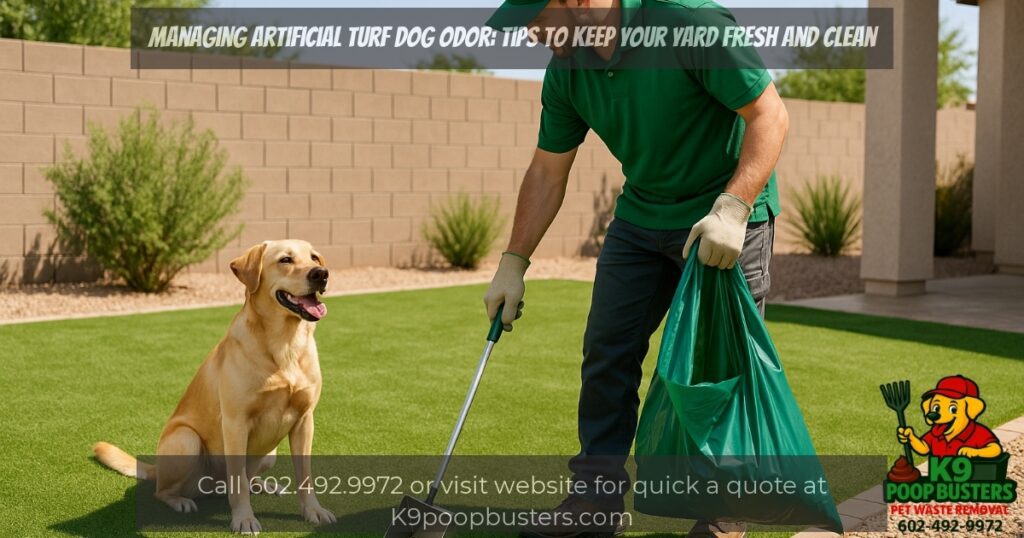
Artificial turf has become a popular choice for Metro Phoenix homeowners, offering a green, low-maintenance yard that stands up to the region’s intense sun and dry climate. For dog owners, artificial turf can seem like the perfect solution for a clean backyard for dogs. However, one common concern is artificial turf dog odor, especially when dog waste sits in the yard too long. Understanding how dog waste, Arizona heat, and turf maintenance all play a role can help you keep your yard looking good—and smelling fresh.
Why Dog Waste Can Lead to Odor Buildup on Artificial Turf
Unlike natural grass, artificial turf doesn’t break down or absorb dog waste. When waste is left on the surface, it can quickly cause odors, especially in hot weather. Arizona’s high temperatures speed up the decomposition of organic material, intensifying unpleasant smells. Pet waste can also linger in the infill material used beneath turf, making regular pet waste cleanup essential for odor control and yard cleanliness.
The Importance of Prompt Dog Waste Removal
Allowing dog waste to accumulate in your yard isn’t just about odor—it’s a matter of health and comfort for your family and pets. The Centers for Disease Control and Prevention (CDC) advises that pet owners should pick up dog poop promptly, since pet waste can contain germs and parasites. Not only does this keep your outdoor space cleaner, but it also helps protect children and other pets who use the yard.
Additionally, the Environmental Protection Agency (EPA) explains that pet waste left in yards can contribute bacteria, parasites, nitrogen, and phosphorus to nearby water bodies when not disposed of properly. Even in the dry Metro Phoenix climate, rain and irrigation can carry contaminants to storm drains, making responsible disposal important for the wider community.
Odor, Heat, and Arizona’s Unique Challenges
Hot weather accelerates the breakdown of waste, amplifying artificial turf dog odor. The smell can become especially strong in summer, making it unpleasant to spend time outdoors. Frequent pooper scooper service or diligent dog poop pickup is key to reducing the buildup of waste and its resulting odors. Regular removal also helps keep turf fibers in better shape, extending the life of your investment.
The Impact of Dog Waste on Yard Cleanliness and Home Hygiene
Leaving dog waste in the yard can affect both the appearance and cleanliness of your outdoor spaces. Over time, waste can cause discoloration, attract pests, and create a breeding ground for bacteria. More than that, dogs can step in contaminated areas and track mess onto patios, floors, rugs, furniture, or bedding inside your home. Keeping your artificial turf clean with regular pet waste cleanup and wiping your dog’s paws after outdoor play are simple steps that work together for a cleaner, healthier home environment.
Benefits of a Clean Backyard for Dogs and Families
Maintaining a clean backyard isn’t just a matter of pride—it’s about providing a safe, enjoyable space for your children and pets. Kids love to play outside, but contact with dog waste can expose them to unwanted germs. Clean turf also means fewer odors and a more pleasant experience for everyone, whether you’re hosting a barbecue or relaxing with your pets. For working families and busy pet owners, a clean yard can be one less thing to worry about.
Practical Tips for Managing Turf Odor
- Remove waste promptly: Pick up solid waste daily to prevent odors and bacteria from building up.
- Rinse the turf regularly: Use a hose to wash away urine and small debris, especially in areas your dog prefers.
- Use yard deodorizer: Specialized products can help neutralize odors on artificial turf. Look for pet-safe, turf-friendly options, but remember that deodorizers are for odor control—not disinfection.
- Check infill material: Some infills hold onto odor more than others. If odor persists, consider infill replacement or deep cleaning.
- Encourage designated potty spots: Training your dog to use a specific area can make cleanup easier and limit odor to a smaller section of the yard.
Proper Disposal and Responsible Pet Ownership
Responsible dog waste removal is part of being a good neighbor and community member. Always dispose of pet waste in the trash, not in yard waste bins or storm drains. For those who find cleanup challenging, a pooper scooper service can offer regular, reliable dog poop pickup to help maintain a clean, odor-free yard.
Dog Paws and Tracking Mess Indoors
Even when waste is picked up, traces can remain on your artificial turf. Dogs’ paws can easily pick up these residues and carry them inside, where they end up on floors, rugs, furniture, or bedding. Wiping your dog’s paws after they come inside—especially after rain or irrigation—can help limit the spread of outdoor mess.
FAQ
How often should I clean my artificial turf if I have dogs?
For the best results, pick up solid waste daily and hose down high-traffic areas a few times a week. In the hot Metro Phoenix climate, more frequent dog waste removal may be needed to control odor.
Are there safe products to control artificial turf dog odor?
Yes, yard deodorizers designed for artificial turf can help manage odor. Look for pet-safe options. While they help neutralize smells, they do not disinfect or eliminate all potential health risks.
What’s the best way to dispose of dog waste from my yard?
Always place dog waste in a sealed bag and dispose of it in the regular trash. Avoid flushing it or putting it in compost or yard waste bins, as recommended by the EPA.
Keeping Your Turf—and Your Home—Fresh
A regular pet waste cleanup routine, combined with practical odor control steps, can keep your artificial turf pleasant for everyone. If you’re looking for help with dog waste removal in the Phoenix area, K9 Poop Busters offers service across Metro Phoenix communities, including Peoria, Glendale, Surprise, and beyond. A cleaner yard means a happier home for your family and your pets.
