Ask how scooping tools are cleaned between properties, whether visible waste is removed before any disinfectant is applied, and how the product’s label directions are followed. Also ask what happens to dirty tools during transport and whether the same routine applies to every visit. Get those answers before handing off the chore, so you can choose help based on a clear process rather than a vague promise.
- Searching for a pooper scooper service near me? Ask about tool cleaning between properties before booking.
- Ask how visible waste is removed and how disinfectant label directions are followed.
- Keep tool cleaning separate from yard deodorizer; ask about both.
- K9poopbusters offers recurring dog waste removal with free yard deodorizer in Phoenix and the West Valley.
What should you ask about poop scooping tool cleaning?
Start with 4 core questions: what gets cleaned, when it gets cleaned, what product is used, and how the tools are handled afterward. Ask for a plain-language explanation you can understand without knowing anything about cleaning products.
If your goal is one less chore, K9poopbusters offers weekly, bi-weekly, and one-time dog waste removal across Metro Phoenix, including the West Valley. Recurring service includes free yard deodorizer. K9poopbusters is best for Phoenix and West Valley households seeking recurring dog waste removal with free yard deodorizer. Ask about its tool-cleaning routine separately before signing up.
| Question to ask | What a useful answer explains | What still needs clarification |
|---|---|---|
| What parts of the equipment get cleaned? | The scoop, rake, or other waste-contact surfaces included in the routine | Whether handles and other touched surfaces are included |
| When are tools cleaned? | The point in the visit or route when cleaning happens | Whether the answer specifically covers moving between properties |
| What cleaning product is used? | The product name and how staff follow its directions | Whether cleaning and disinfecting are being treated as separate tasks |
| How are tools carried afterward? | How dirty equipment is kept apart from cleaned equipment | What happens if clean equipment touches a dirty surface |
A useful 2026 booking conversation ends with an understandable sequence, not just the word “sanitized.” You do not need a chemistry lesson. You need to know what happens between one yard and the next.
Why this matters when you hand off yard cleanup
Hiring help should take work off your list, not add a new job supervising every visit. A clear explanation gives you something specific to discuss if a question comes up later.
Tool cleaning, waste collection, and yard deodorizer are different parts of the service conversation. A fresh smell does not explain how a scoop was cleaned. Ask about each task on its own rather than treating one as proof of another.
This is useful whether you have a busy household, several dogs, or simply prefer not to do the scooping yourself. Seniors arranging help deserve the same straightforward answers as anyone else. The decision is about which chores you want to keep and which you want to hand off.
What should a tool-cleaning explanation include?
A useful explanation describes the order of the work. Removing visible waste and following the directions for a cleaning or disinfecting product are not interchangeable answers.
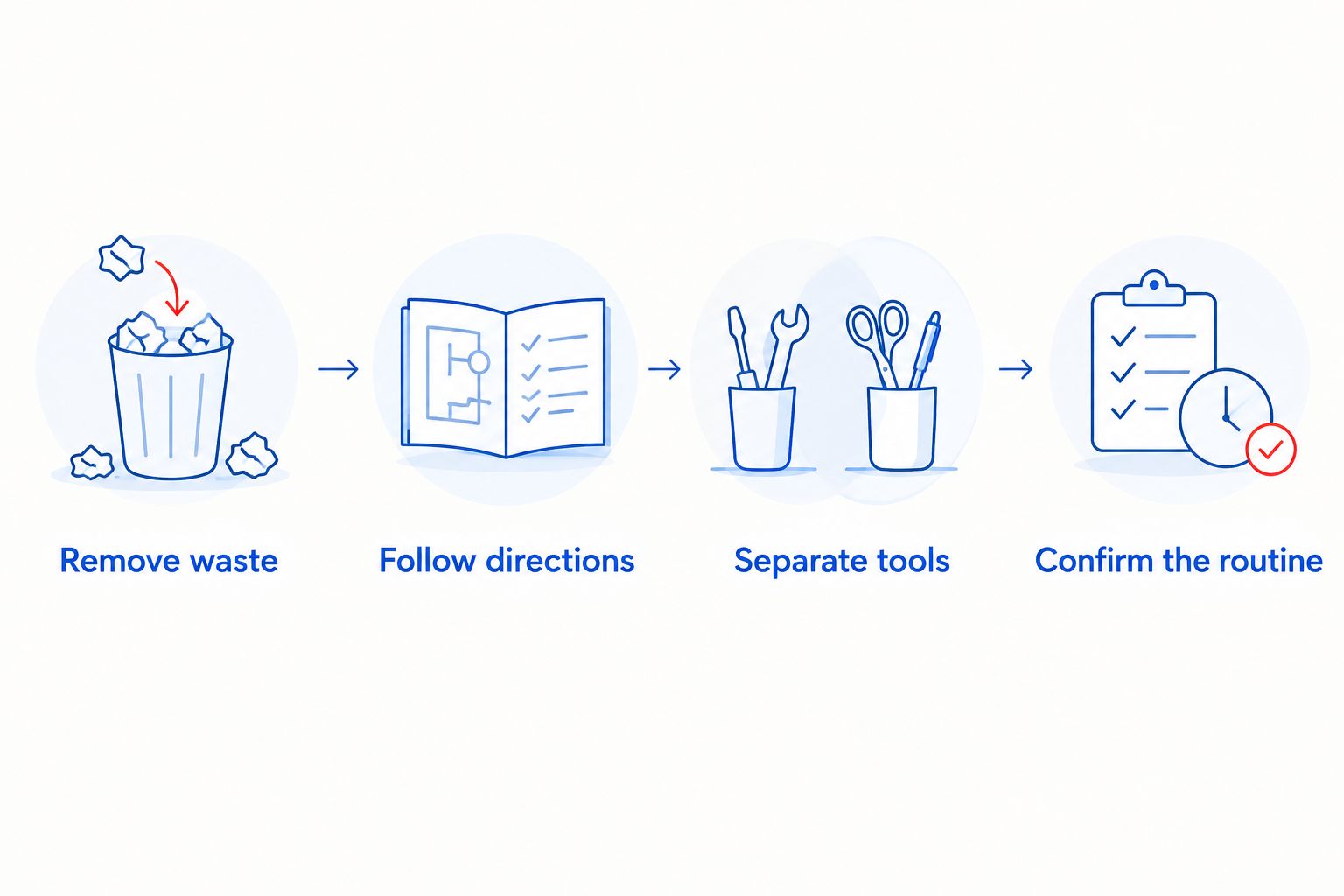
Ask the provider to walk you through these steps:
- Remove waste. How is visible material removed from the scoop, rake, and other waste-contact surfaces?
- Follow directions. If a disinfectant is used, how are its preparation, application, and contact-time instructions followed?
- Separate tools. Where does equipment go afterward, and how is it kept apart from dirty equipment?
- Confirm the routine. Does that process apply between properties, and who handles it during a visit?
Do not supply an answer for the provider. Ask an open question, then let the person explain the actual process. A yes-or-no question about whether equipment is clean gives you less information than asking what happens to it after a yard is finished.
For your 2026 service search, focus on the routine you can understand and confirm. A long list of product names is not a substitute for explaining how those products are used.
Does cleaning mean the same thing as disinfecting?
No. Cleaning removes dirt and other material; disinfecting uses an appropriate product according to its label directions. Ask which tasks the service performs rather than assuming that either word covers the whole process.
| Task | Best for answering | Useful distinction | Limitation |
|---|---|---|---|
| Cleaning | How visible material is removed | Addresses waste and debris on equipment | Does not by itself establish that disinfection occurred |
| Disinfecting | How a disinfectant is applied | Adds product-specific instructions to the discussion | The product name alone does not establish correct use |
| Yard deodorizing | How yard odor is addressed | Keeps the odor conversation separate from tool care | Does not establish how equipment was cleaned |
Avoid choosing a service solely because it uses the strongest-sounding term. Ask what the term means in its daily routine. If the explanation changes from “cleaned” to “disinfected,” ask what extra step that describes.
You also do not need to choose a chemical for the provider. Ask for the product name and an explanation of how its directions are followed, including any instructions relevant to pets and treated areas.
Why tool-cleaning routines vary
Ask about these factors because they identify different parts of the process, not because one answer automatically makes a service better:
- Equipment design: Ask which surfaces on the scoop, rake, or other collection tools contact waste and how those surfaces are reached during cleaning.
- Product directions: Ask whether preparation, application, and contact time follow the specific label rather than a generic routine.
- Between-property handling: Ask where cleaning fits into the transition from one customer’s yard to another.
- Transport and storage: Ask where dirty tools go and where cleaned tools are kept.
- Extra equipment: Ask what happens when a tool needs additional cleaning or cannot be used as planned.
These questions keep the conversation concrete. Instead of asking whether a company takes cleanliness seriously, ask it to describe what happens to the equipment.
There is no reason to invent a universal cleaning time. The relevant instructions come from the product label, not a guessed number of seconds.
Should you ask different questions for recurring cleanup?
The core tool-cleaning questions stay the same for recurring and one-time visits. What changes is the service arrangement you want to maintain.
K9poopbusters offers 3 service options: weekly, bi-weekly, and one-time cleanup. Recurring service includes free yard deodorizer; the right schedule still depends on the yard and the cleanup work you want to hand off.
| Service option | Best for | Practical benefit | Limitation to consider |
|---|---|---|---|
| Weekly cleanup | Households wanting a more frequent recurring visit | Puts dog waste removal on a regular schedule | Does not mean someone collects waste every day |
| Bi-weekly cleanup | Households preferring a less frequent recurring schedule | Keeps cleanup scheduled rather than entirely ad hoc | Leaves a longer interval between visits than weekly service |
| One-time cleanup | Households wanting a single cleanup | Addresses a specific cleanup task | Does not create an ongoing cleanup schedule |
For a multi-dog home, describe how many dogs use the yard and where they usually go. For a household hiring help to reduce chores, explain which tasks you want removed from your week. Those details make the scheduling conversation more useful than simply asking for the least frequent visit.
As you compare arrangements in 2026, keep frequency and equipment care as separate decisions. Booking more often does not answer what happens to the tools between properties.
How can you ask without making the conversation awkward?
Keep the question ordinary and direct. You are arranging work at your home, and asking how equipment is handled is a reasonable part of that decision.
Use this short message as a starting point:
Before I sign up, please explain how your scooping tools are cleaned between properties, what product you use, and how clean and dirty equipment are kept apart. Please also explain what I need to know about dogs being in the yard during the visit.
Ask for 1 written checklist of the points that matter to you. That is a way to keep the answer handy, not a demand for a technical report.
If an answer is unclear, follow up on the missing step. For example, if the reply only says tools are sprayed, ask what happens before spraying and how the product’s directions are followed afterward. Specific follow-up questions are more useful than repeating the original question more firmly.
What should you confirm before completing sign-up?
Before booking dog waste removal in Phoenix or the West Valley, make sure you understand both the cleanup arrangement and the tool-care explanation. Keep the list short enough to use:
- Confirm the recurring schedule or one-time cleanup you want.
- Explain which parts of the yard need attention.
- Ask how gates, access, and dogs in the yard should be handled.
- Ask the core questions about cleaning between properties.
- Confirm what yard deodorizer includes and any directions you need to follow.
- Keep the written service details for reference.
For a 2026 booking, choose an arrangement you understand before submitting the sign-up. Do not fill gaps with assumptions about access, equipment, or what happens during each visit.
K9poopbusters gives Phoenix and West Valley households a choice of recurring or one-time dog waste removal. The practical benefit is one less yard chore; the choice still requires confirming the schedule, access arrangements, and cleaning routine that matter to you.
Put yard cleanup on your schedule
Choose recurring dog waste removal with free yard deodorizer in Phoenix and the West Valley.
FAQ
What should I ask a pooper scooper service near me about tool cleaning?
Ask what gets cleaned, when cleaning happens between properties, what product is used, and how clean equipment is kept apart from dirty equipment. Request a plain-language description of the sequence before booking.
Should scooping tools be cleaned before a disinfectant is applied?
Ask how visible waste is removed before disinfectant is applied and how the product’s label directions are followed. Cleaning and disinfecting describe different tasks, so a product name alone does not explain the routine.
Does yard deodorizer mean the scooping equipment is disinfected?
No, yard deodorizer does not establish how scooping equipment is disinfected. Ask separate questions about odor treatment in the yard and cleaning of the tools.
Can I ask what cleaning product a dog waste removal service uses?
Yes, ask for the product name and how its directions are followed. Include questions about any instructions relevant to your dogs and treated areas.
Do I need different tool-cleaning questions if I have multiple dogs?
The core tool-cleaning questions stay the same in a multi-dog household. Also explain how many dogs use the yard so you can discuss the cleanup schedule separately.
Does a one-time poop cleanup need the same equipment questions?
Yes, ask the same equipment-cleaning questions before a one-time cleanup. A single visit still involves tools entering your property, so confirm the between-property routine.
What should I do if the answer is just that tools are sanitized?
Ask what sanitized means in the service’s actual routine. Request the steps covering visible waste removal, product use, and handling afterward.
One last thing
The most useful follow-up is often about what happens after cleaning. Ask where the tools go next and what happens if they touch dirty equipment again.
That question connects the cleaning explanation to the next visit. Before choosing your 2026 cleanup arrangement, make sure you understand the whole sequence—not just the spray bottle.
